
Beyond the cabin and heater, the accessories worth budgeting for are a full stone load ($40 to $90), a bucket and ladle ($20 to $50), a combination thermometer and hygrometer ($15 to $40), cedar backrests ($40 to $100 per bench), floor grates ($30 to $80), and a sand-glass or digital timer ($15 to $35). Together these add roughly $150 to $400 on top of the unit price, and skipping most of them noticeably changes how comfortable and usable the sauna is day to day.
Sauna Stones: The One Accessory That Is Not Optional
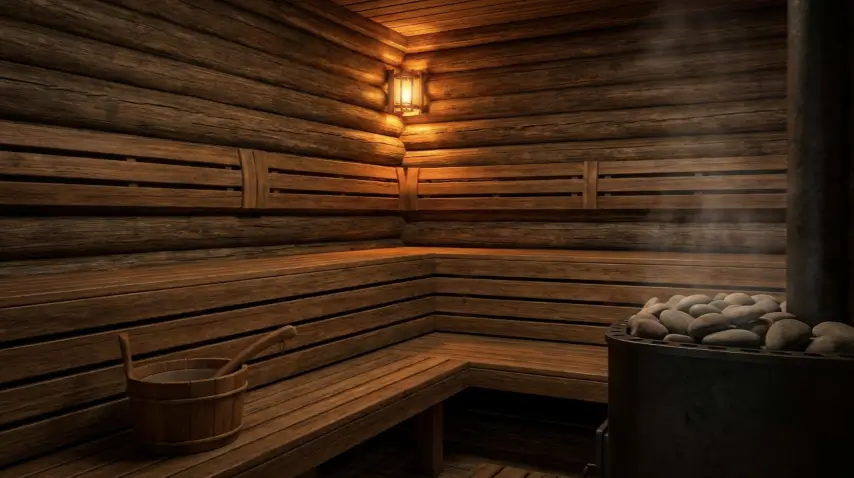
Every electric or wood-fired heater needs a proper stone load to function as a traditional sauna rather than a space heater. Stones absorb and radiate heat evenly and, when water is poured over them, produce the burst of steam known as loyly that defines the traditional experience. A full load typically costs $40 to $90 depending on heater size, and stones should be inspected at least once a year, since repeated heat-and-water cycling causes them to crack and break down. Most regular users replace a portion of the load every two to four years rather than waiting for total failure, which keeps heat distribution even across the whole batch.
Bucket and Ladle: Small Cost, Big Effect on the Experience
A wood or stainless steel bucket and ladle set, usually $20 to $50, is how water gets onto the stones to create steam. This matters even for electric heaters, which run dry by default; without a bucket and ladle, an owner has no practical way to add humidity to a session. Cedar buckets look nicer but need occasional conditioning to prevent leaks, while stainless versions cost a bit less and need no maintenance at all. Either works fine, and this is one of the cheapest upgrades that changes the actual feel of a session more than almost anything else on this list.
Thermometer and Hygrometer: Reading the Room Correctly
A thermometer alone tells you the air temperature, but it does not tell you how that temperature will actually feel, since humidity changes perceived heat substantially. A combined thermometer and hygrometer, typically $15 to $40, gives a more complete read and helps a new owner dial in a comfortable balance between dry heat and steam. Cheaper analog dial versions work fine for most home use; digital versions cost a bit more but are easier to read accurately from across the room.
Backrests: Comfort That Extends Session Length
Sitting against bare wall paneling for twenty minutes is uncomfortable enough that it shortens how long most people stay in the heat. Angled cedar backrests, usually $40 to $100 per bench section, add real comfort and are one of the accessories that separates a sauna people use three times a week from one that gets used once a month. Some cabins include backrests standard; many do not, so it is worth checking the spec sheet rather than assuming.
Floor Grates and Duckboards: Protecting the Floor
Slatted wood floor grates, often called duckboards, run $30 to $80 and sit on the sauna floor to lift feet off wet or hot surfaces and let water drain and air circulate underneath. Without them, water pooling on a solid floor takes longer to dry and can eventually damage flooring or promote mildew in a humid environment. Grates lift out easily for cleaning, which matters more than it sounds like it would once a cabin sees regular use.
Timers, Lighting, and Rounding Out the Budget
A simple sand-glass or digital timer, $15 to $35, helps new users pace sessions without guessing, since overstaying in a 180-degree room is a common beginner mistake. Low-voltage sauna-rated lighting, if not already built into the cabin, runs $30 to $70 and needs to be rated for high heat and humidity rather than a standard household fixture. Add these up against the stones, bucket, thermometer, backrests, and floor grates, and total accessory spend generally lands in the $150 to $400 range. Buyers comparing which accessories come standard on a given model versus sold separately can check SweatDecks’ lineup before finalizing a budget, since bundled kits vary quite a bit from one maker to the next.
See also: Digital Twins: The Future of Simulation
Optional Extras Worth Considering Once the Basics Are Covered
Beyond the essentials, a few smaller purchases add real comfort without much added cost. A cedar headrest or rolled towel pillow, usually $15 to $30, makes lying on the top bench for a longer session noticeably more comfortable. Aromatic additives like eucalyptus or pine essential oil, mixed a few drops at a time into the bucket water, run $10 to $20 a bottle and can enhance the loyly experience, though they should only be used in oils rated safe for sauna use rather than generic fragrance products. A small covered storage bench or shelf just inside the door, often $30 to $60, keeps towels, the bucket, and stones organized instead of cluttering the floor.
Prioritizing Accessories on a Tight Budget
Anyone buying accessories gradually rather than all at once should prioritize the stones and a bucket and ladle first, since neither the heater nor the loyly experience works properly without them. A thermometer and hygrometer come next, since dialing in comfortable temperature and humidity affects every single session going forward. Backrests and floor grates can reasonably wait a few months if the budget is tight, since the sauna still functions without them, just with somewhat less comfort in the meantime. Treating accessories as a short rollout over the first few months, rather than an all-or-nothing purchase, is a practical way to spread out the cost without meaningfully delaying regular use.
What the Research Says About the Sessions These Accessories Support
None of these accessories change the underlying health associations tied to sauna bathing, but they do make regular, longer sessions more comfortable, and duration and frequency are exactly what the research measures. A large Finnish cohort study found that men who used a sauna four to seven times a week had lower rates of fatal cardiovascular events and all-cause mortality than men who used one once a week. A related study found that sauna frequency together with cardiorespiratory fitness was jointly associated with lower long-term mortality risk. Separate research on blood-based markers found measurable short-term cardiovascular changes among regular sauna users following a session. A cabin with proper stones, steam capability, and comfortable seating is simply more likely to get used at the frequency these studies describe.
Frequently Asked Questions
What accessories come standard with a traditional sauna? Most kits include the heater, a starter stone load, and basic bench lumber. A bucket, ladle, thermometer, backrests, and floor grates are usually sold separately.
How much do sauna stones cost and how often do they need replacing? A full load runs $40 to $90, with partial or full replacement every two to four years of regular use.
Is a bucket and ladle necessary for an electric sauna? Yes, for anyone who wants steam. A basic wood or stainless set costs $20 to $50.
Do I need a hygrometer if the sauna already has a thermometer? A thermometer alone only tells half the story. A combination unit, usually $15 to $40, gives a more accurate read on session intensity.
References
- Association between sauna bathing and fatal cardiovascular and all-cause mortality events, JAMA Internal Medicine, 2015
- Joint associations of sauna bathing and cardiorespiratory fitness on cardiovascular and all-cause mortality risk: a long-term prospective cohort study, Annals of Medicine, 2018
- Short-term effects of Finnish sauna bathing on blood-based markers of cardiovascular function in non-naive sauna users, Heart and Vessels, 2018
By Owen Castellano



 By
By